AI Quality & Evaluation / 2018
Project Zero
Designed AI-assisted trust and enforcement systems that helped brands, investigators, and Amazon identify, prevent, and remove counterfeit products while balancing customer trust, legal defensibility, and global operational scale.

Challenge
Design AI-assisted enforcement systems capable of protecting brands and customers from counterfeit products while supporting legally defensible, globally scalable decision making.
Strategy
Combine machine learning, structured workflows, operator guardrails, and trusted brand participation into a single enforcement platform that reduced operational burden while improving accuracy and accountability.
Design Approach
Design for trust rather than speed by introducing intentional friction, explainable workflows, operator training, and system-level safeguards where incorrect decisions could create legal, financial, and customer harm.
Scope
Product strategy and UX leadership spanning counterfeit detection, self-service enforcement, investigator workflows, operator certification, global marketplace localization, product serialization, and AI-assisted decision systems.
Outcome
Helped define the customer and operational experience for Project Zero, enabling AI-assisted enforcement systems that scaled globally while improving investigator consistency, report quality, and brand trust.
Designing AI-assisted trust systems
Counterfeit products create far more than an intellectual property problem.
Every incorrect enforcement decision can affect legitimate businesses, customer safety, legal outcomes, operational costs, and Amazon’s reputation for trust.
Project Zero was created to move counterfeit enforcement from reactive investigations toward proactive protection by combining AI, trusted brand participation, and operational workflows into one platform.
My work focused on defining the experience architecture behind those systems, helping investigators, brand owners, and Amazon make accurate decisions while maintaining accountability at global scale.
Three systems working together
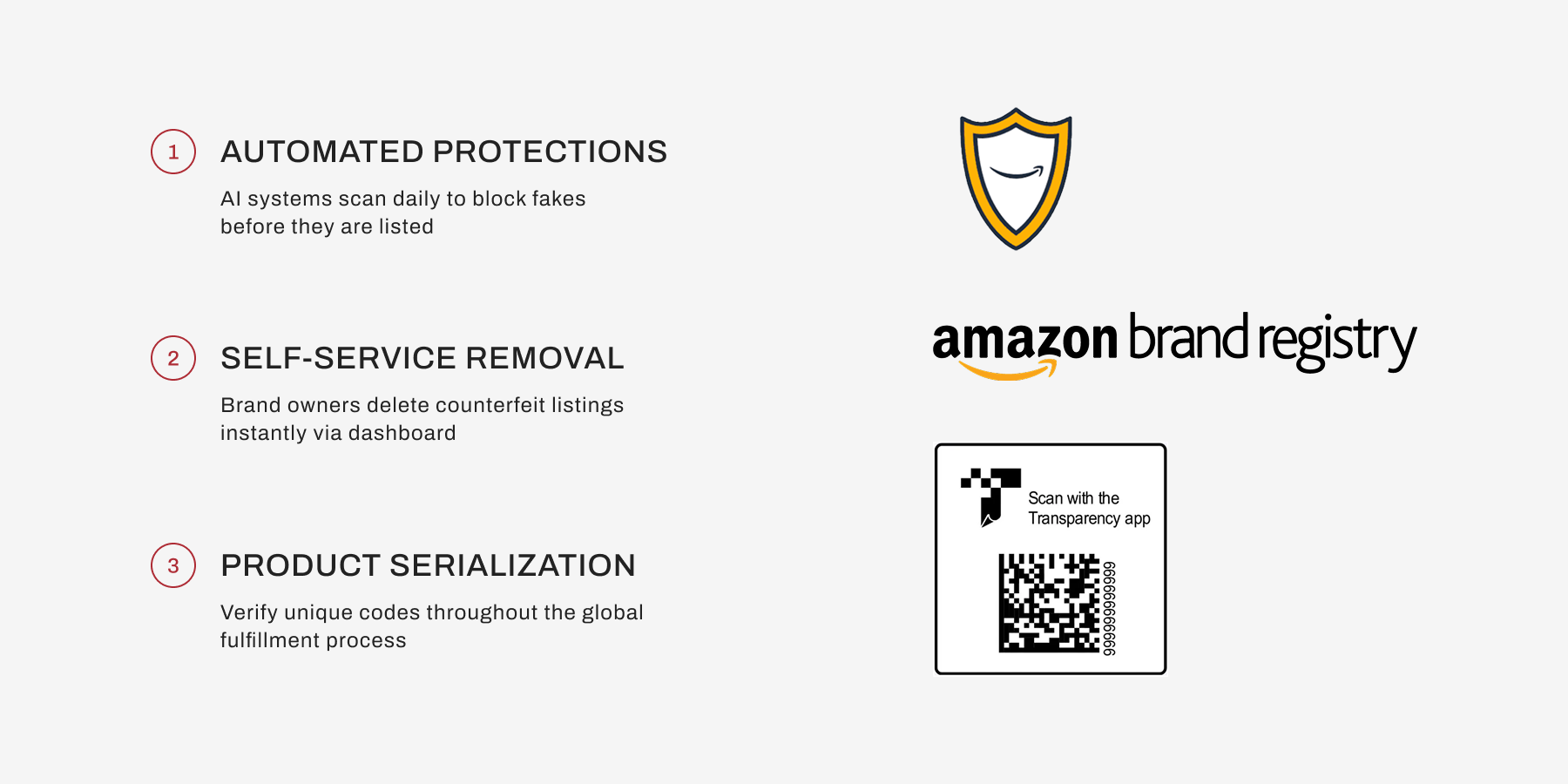
Project Zero combined three complementary capabilities.
Automated Protections: Machine learning prevented counterfeit listings before customers ever saw them.
Self-Service Removal: Trusted brands could remove counterfeit listings directly, dramatically reducing investigation time.
Product Serialization: Unique product identifiers verified authenticity throughout Amazon’s fulfillment network.
Together these systems shifted enforcement from reactive investigations toward proactive protection.
Designing for consequences, not clicks
Unlike traditional enterprise software, every interaction inside Project Zero carried real-world consequences.
Removing a legitimate product could harm a business.
Failing to remove a counterfeit product could harm customers.
Every recommendation needed to be understandable, explainable, and legally defensible.
The work required balancing:
- customer trust
- false-positive risk
- investigator consistency
- operational efficiency
- AI governance
- legal accountability
The interface became only one part of a much larger decision system.
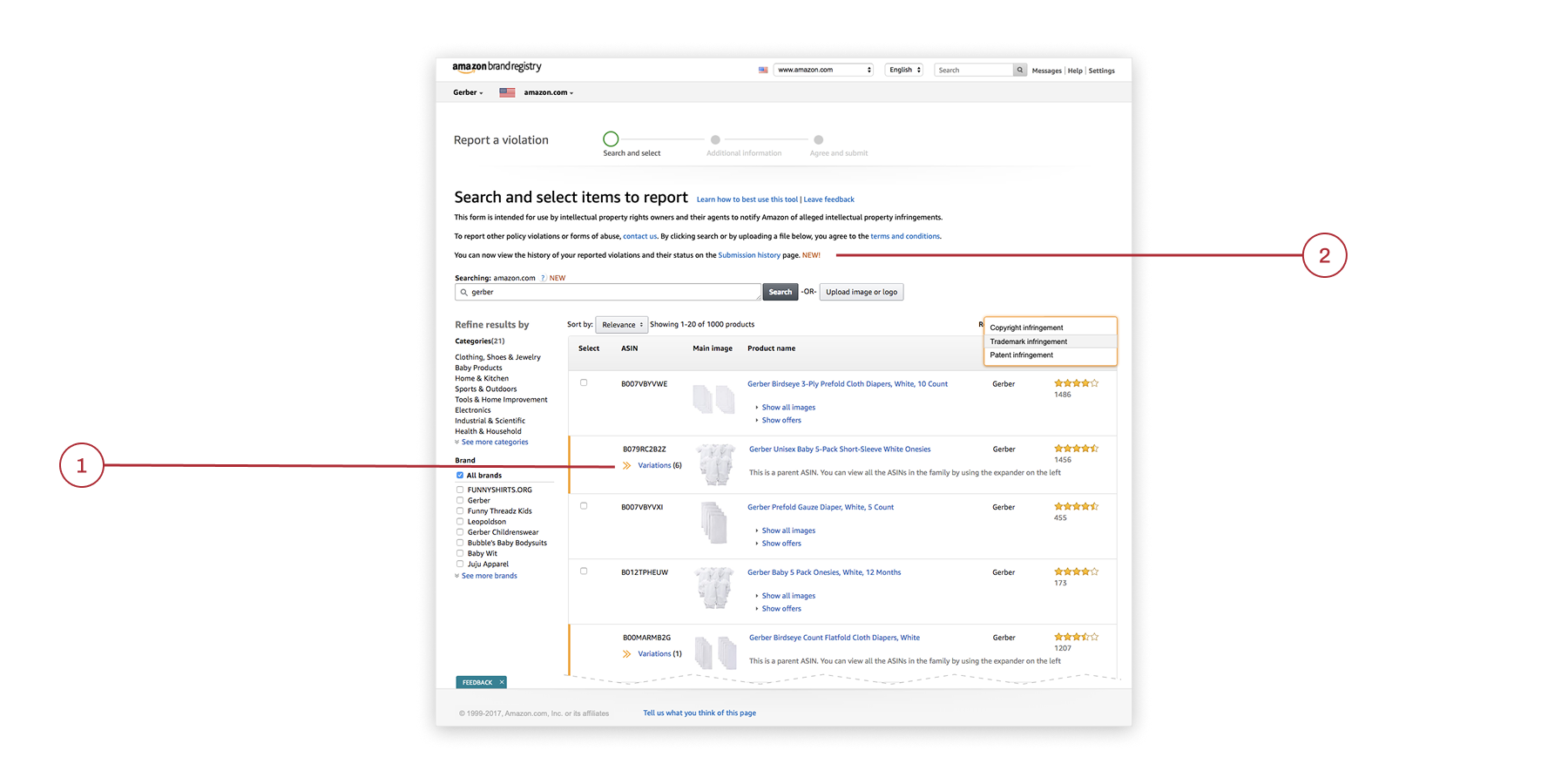
Intentional friction creates better decisions
One of the most important design principles was recognizing that easier is not always better.
Removing products from Amazon’s marketplace is a privileged action with significant legal and business implications.
Instead of optimizing only for speed, I introduced structured friction that encouraged thoughtful decision making.
Examples included:
- requiring explicit attestations
- limiting overly broad enforcement actions
- making reviewers acknowledge responsibility
- exposing enforcement history
- increasing visibility into previous decisions
These interactions reduced operator error while strengthening accountability.
Designing for trusted operators
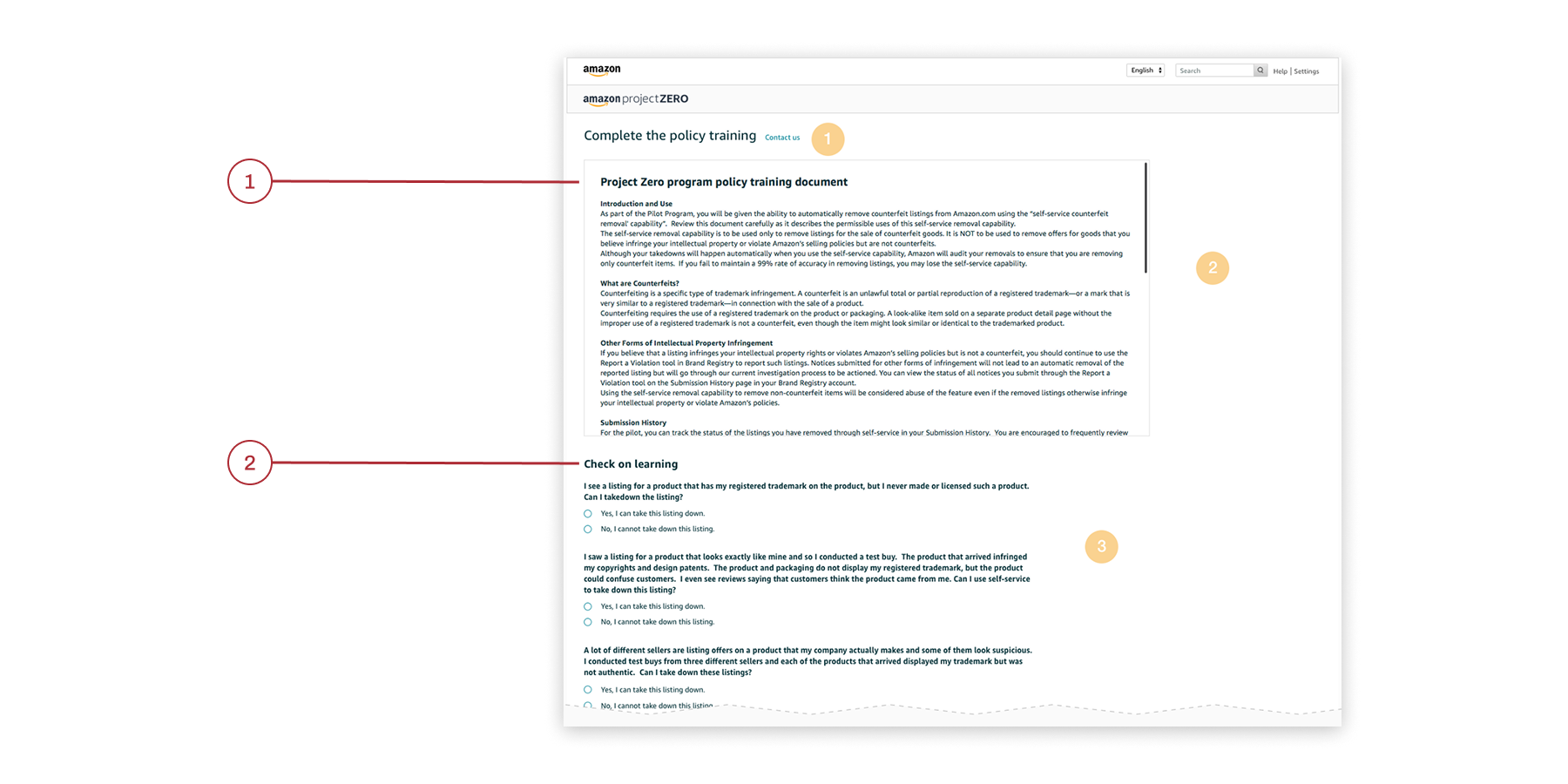
The platform depended on human judgment as much as artificial intelligence.
Access to enforcement capabilities required documentation, policy review, certification, and testing before users received permissions.
The experience guided operators through:
- understanding policy
- learning legal responsibilities
- demonstrating competency
- earning access to enforcement tools
Training became part of the product experience rather than a separate organizational process.
One platform, many legal systems
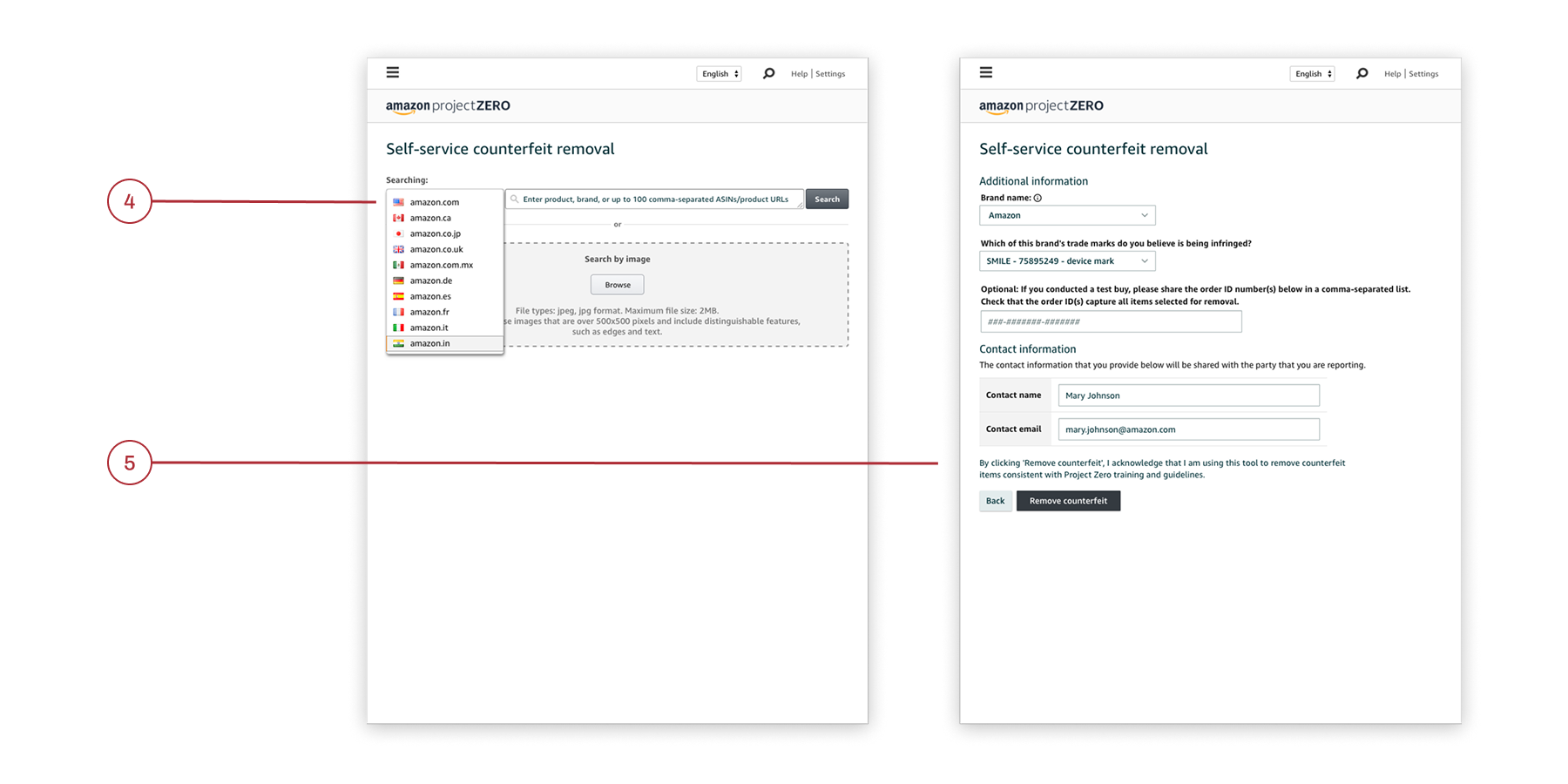
Counterfeit enforcement varies across countries.
Trademark laws, marketplaces, reporting requirements, and operational processes differ throughout the world.
Rather than creating separate products for every region, we designed reusable workflows that adapted to local legal requirements while preserving a consistent experience.
This allowed Project Zero to scale globally without fragmenting the product.
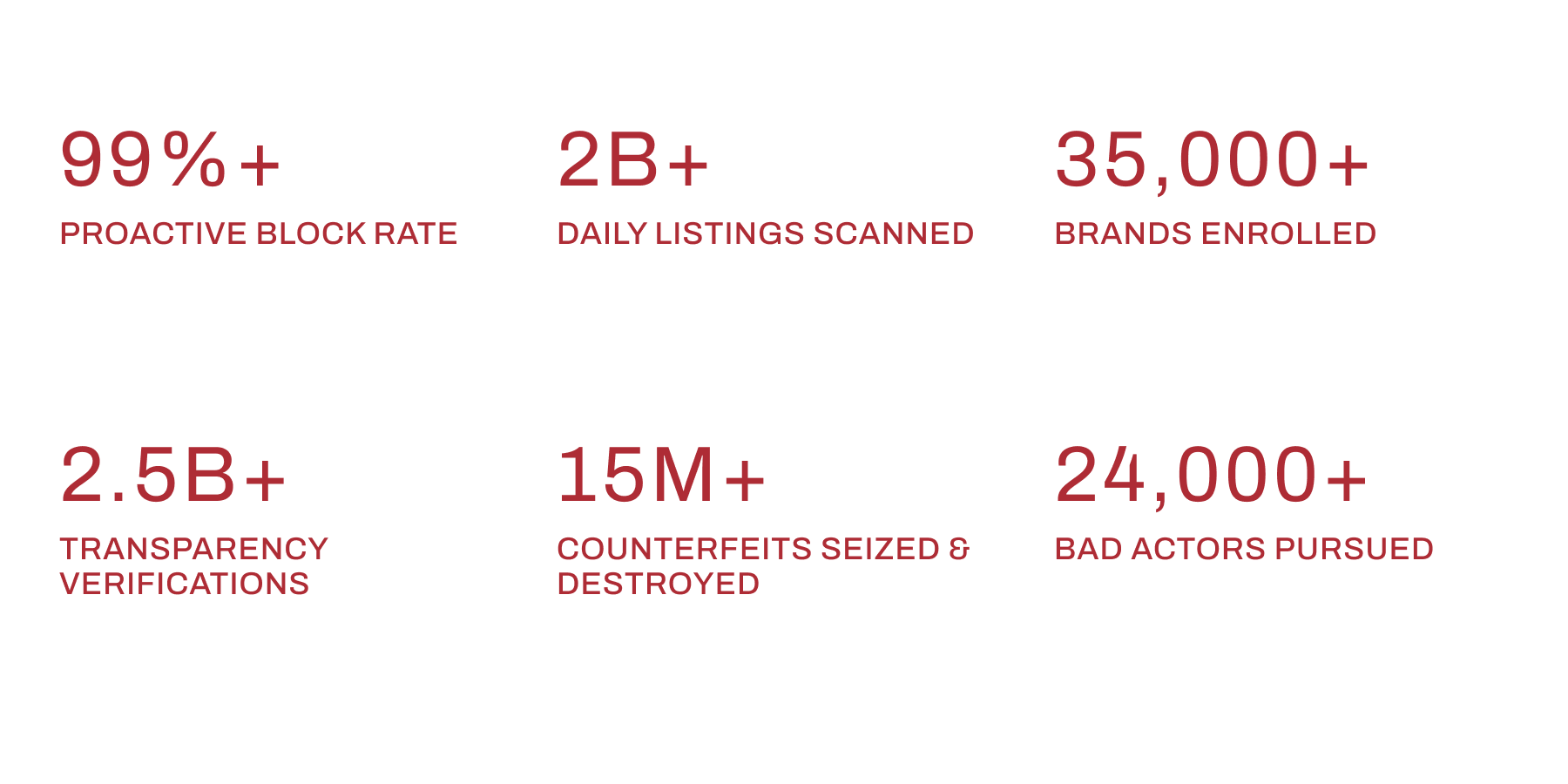
Trust at global scale
Project Zero became part of a much larger customer trust ecosystem protecting Amazon’s marketplace.
The platform contributed to:
- over 99% proactive blocking before reports were required
- more than 2 billion listings scanned daily
- 35,000+ enrolled brands
- 2.5 billion serialized product verifications
- 15 million counterfeit products seized
- 24,000 bad actors pursued
These outcomes illustrate the scale of the platform rather than individual design metrics. They demonstrate the operational impact of combining AI, thoughtful workflows, and strong governance into one integrated trust system.
Why it mattered
Project Zero changed how I think about enterprise design.
The challenge was never creating faster workflows.
It was creating decision systems where AI, human judgment, policy, legal requirements, and operational processes worked together to produce trustworthy outcomes.
Those same principles continue to influence my work designing AI-native platforms, developer experiences, and operational systems today.