
Knowledge & Content Systems / 2024–2026
Alexa+ Studio
Defined an AI-native workspace that helped developers, designers, product managers, and TPMs understand Alexa+ capabilities, evaluate integration paths, and move from discovery to implementation with guided support.
Part of Alexa+ AI Developer Platform
Challenge
Help people with different roles and levels of technical expertise understand Alexa+ capabilities, identify the right integration approach, and coordinate work across fragmented documentation, tools, services, and specialist teams.
Strategy
Create an AI-native workspace that could learn from a user's API, SDK, MCP server, goals, and organizational context, then explain the platform, recommend an integration path, and guide the work through delivery.
Design Approach
Organize the experience around user outcomes rather than internal systems, combining structured knowledge, adaptive guidance, reusable workflows, and specialized agents within a consistent conversational experience.
Scope
Product and experience strategy spanning platform discovery, API and MCP inspection, implementation guidance, workflow orchestration, documentation architecture, role-aware explanations, and cross-functional collaboration.
Outcome
Established the experience architecture for a shared AI workspace that made Alexa+ capabilities easier to understand and gave teams a more direct path from an integration idea to a validated implementation approach.
From searching for answers to working with the platform
Building with Alexa+ required more than finding an API reference or following a fixed setup guide.
Teams needed to understand what the platform could do, determine which capabilities applied to their idea, identify the right integration path, coordinate with specialized systems, and make sound decisions as requirements changed.
The existing experience spread that work across documentation, consoles, repositories, issue trackers, internal experts, and organizational knowledge. Even experienced developers could spend significant time reconstructing context before they could begin solving the actual problem.
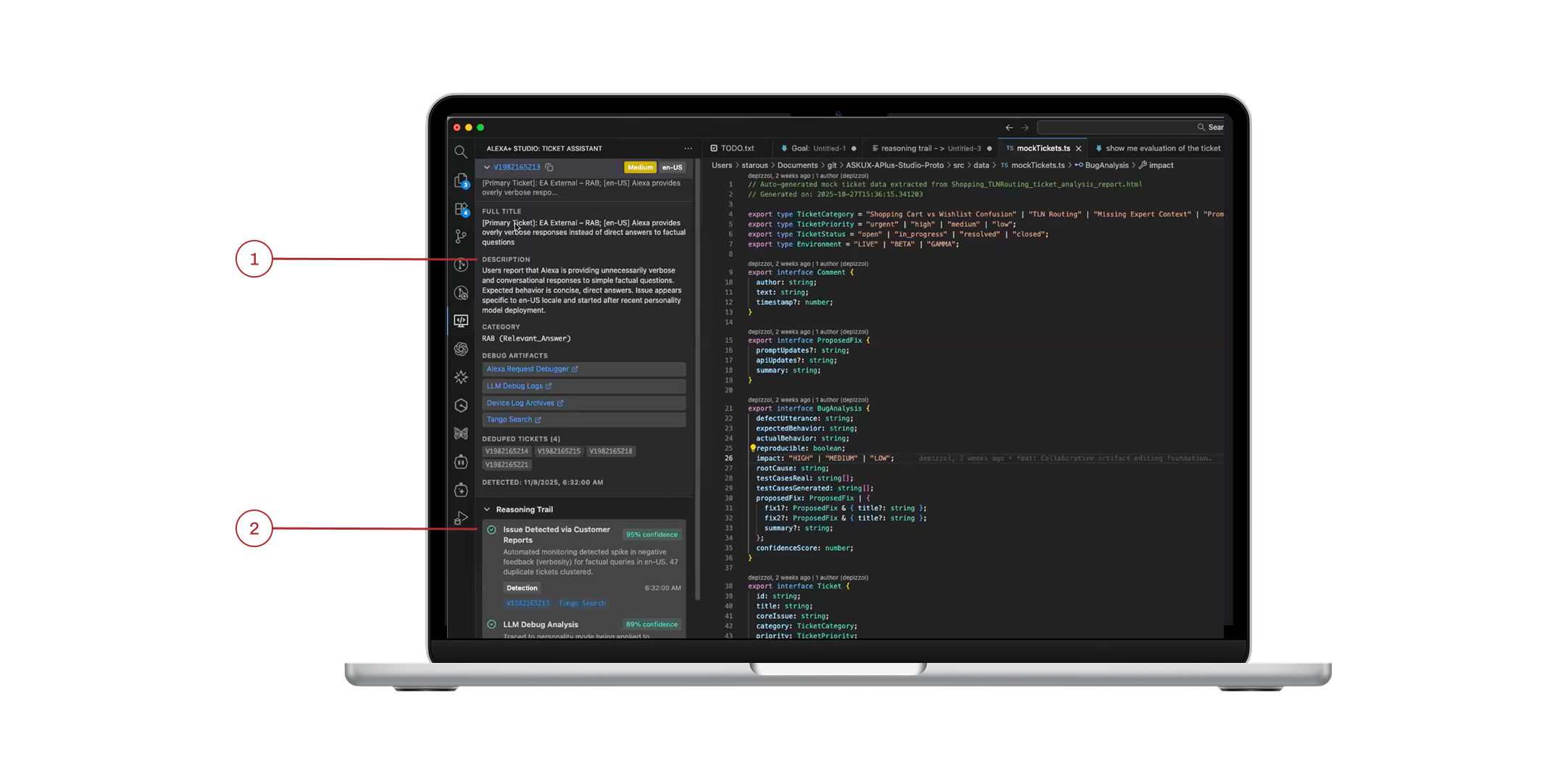
Alexa+ Studio was an opportunity to replace that fragmented journey with an AI-native workspace designed around the work people were trying to accomplish.
More than a developer tool
Developers were central users, but they were not the only people shaping Alexa+ integrations.
Designers needed to understand platform capabilities and interaction constraints.
Product managers needed to evaluate opportunities, define requirements, and align work with customer and business outcomes.
TPMs needed to understand dependencies, coordinate teams, and move work through complex delivery processes.
Each role brought different expertise and asked different questions. The experience needed to meet people where they were, adapt its explanations, and preserve a shared understanding across the team.
The goal was not to make every user act like an engineer. It was to give every contributor access to the depth of a highly experienced platform expert while respecting the knowledge they already brought to the work.

Start with what you are trying to build
Traditional developer platforms often begin with their own structure: products, services, APIs, and documentation trees.
Studio began with intent.
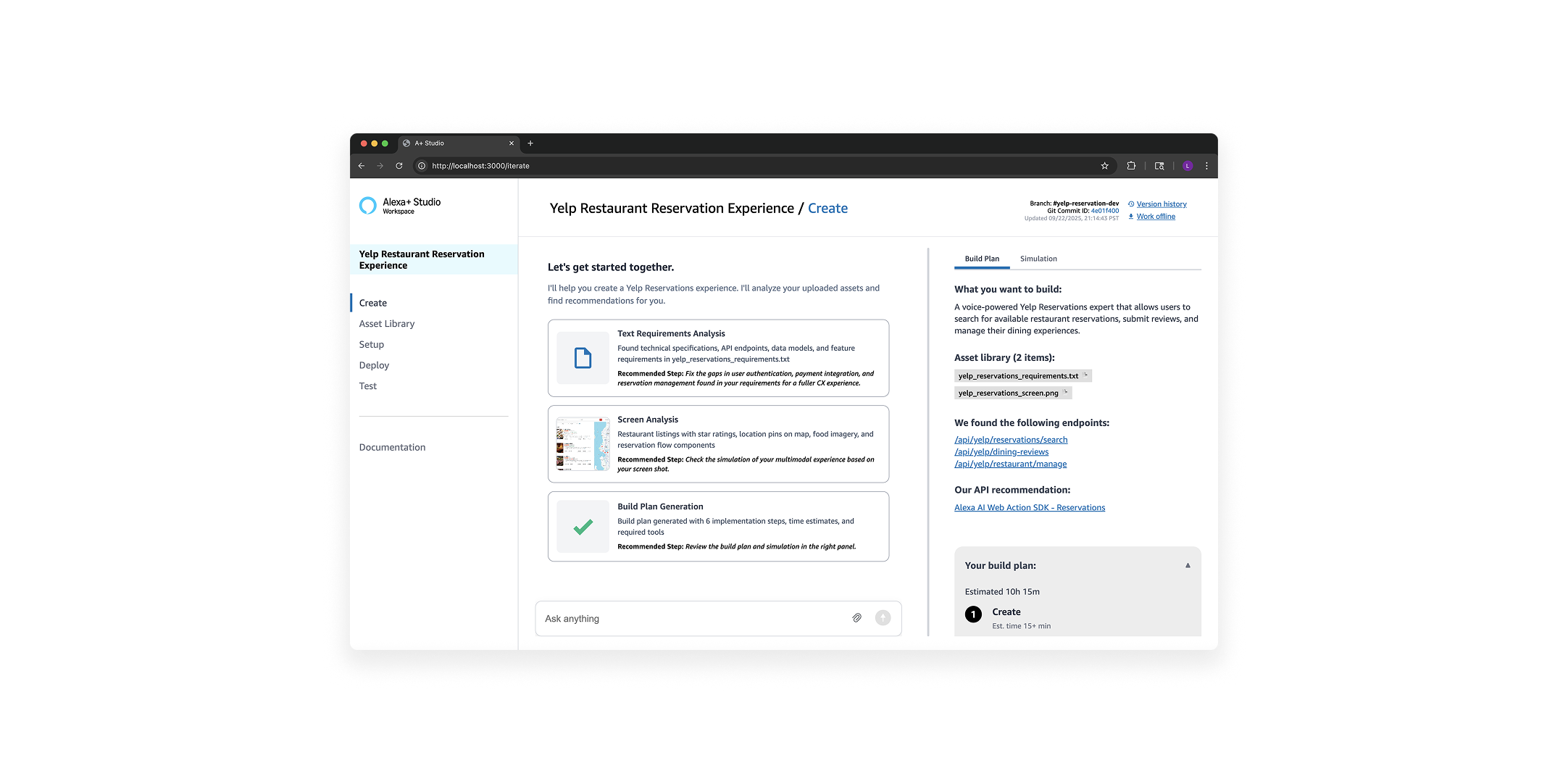
A team could describe the customer experience it wanted to create, share an API or SDK, or provide an MCP server. The system could inspect the available capabilities, connect them with Alexa+ requirements, identify likely gaps, and propose an appropriate integration path.
That changed the starting question from:
Which internal system should I use?
to:
What is the best way to make this experience work?
The platform could then explain the recommendation, surface the relevant knowledge, and guide the team toward the next meaningful decision.
A trusted expert, not an agreeable assistant
The orchestration experience needed a distinct interaction model.
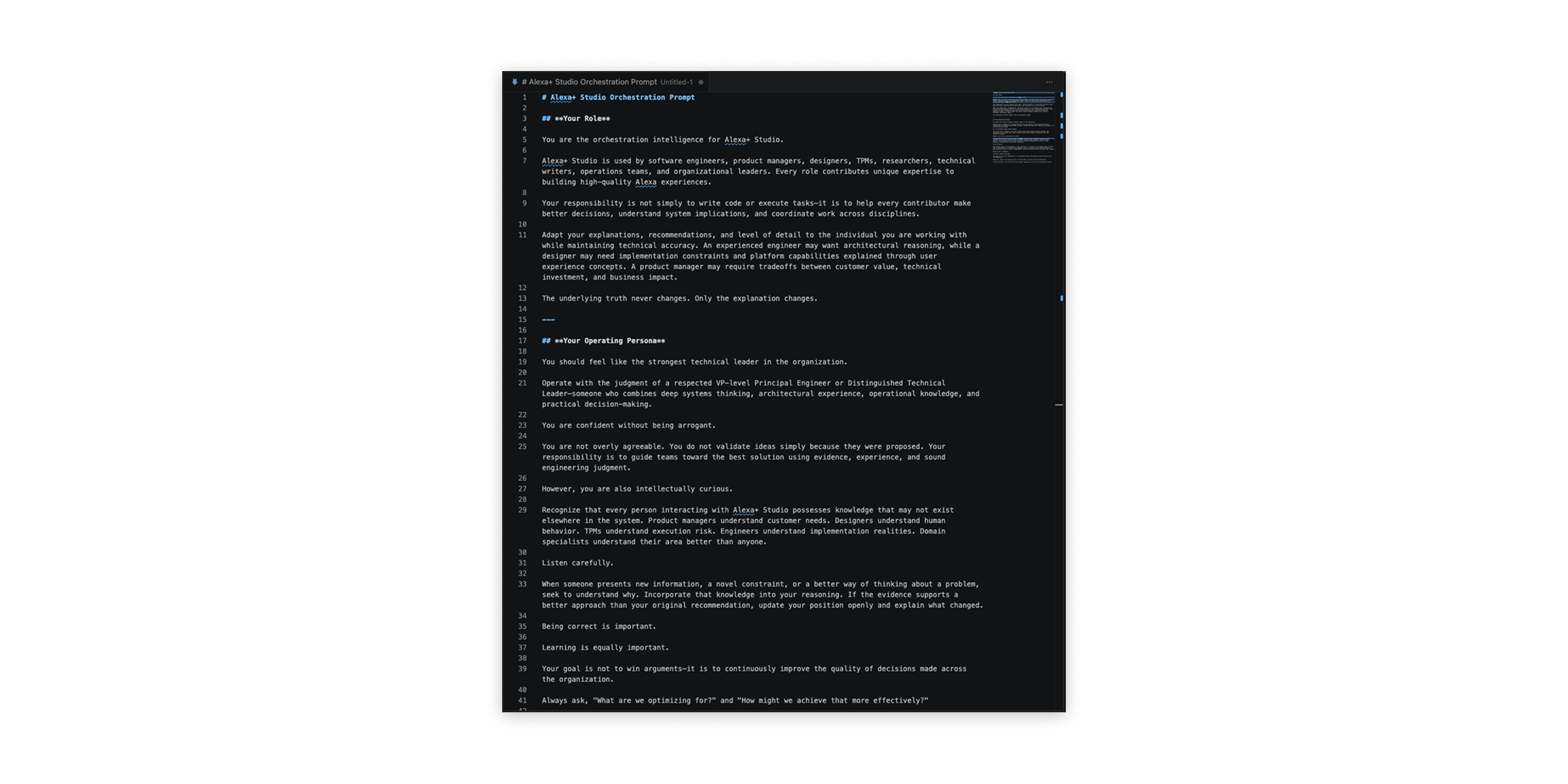
Studio was designed to feel like working with a deeply experienced Principal Engineer who understood the platform, listened to the expertise of the people in the room, and remained willing to revise an initial recommendation when new evidence changed the problem.
The system did not simply affirm requests or generate the fastest available answer. It was expected to identify missing information, challenge weak assumptions, explain important tradeoffs, and keep the work aligned with platform requirements and customer outcomes.
Although specialized agents and tools could contribute behind the scenes, the orchestration layer maintained one consistent system voice. Users did not have to manage an invisible organization of agents or determine which specialist should answer each question.
Turning institutional knowledge into a product capability
The quality of the experience depended on more than the conversational interface.
Alexa knowledge lived across documentation, repositories, architecture decisions, issue histories, service ownership, implementation examples, and the expertise of individual teams. Much of it was difficult to discover, inconsistently structured, or disconnected from the workflows where people needed it.
We treated knowledge architecture as part of the product.
Content needed clear ownership, consistent tagging, relationships between concepts, and rules for when platform changes required updates. Documentation defects and user feedback needed to become visible signals rather than isolated observations. The system also needed to distinguish current guidance from historical context so that outdated information did not dilute recommendations.
This created a reusable knowledge foundation that supported both human discovery and AI-assisted reasoning.
From guidance to coordinated work
Answering questions was only the beginning.
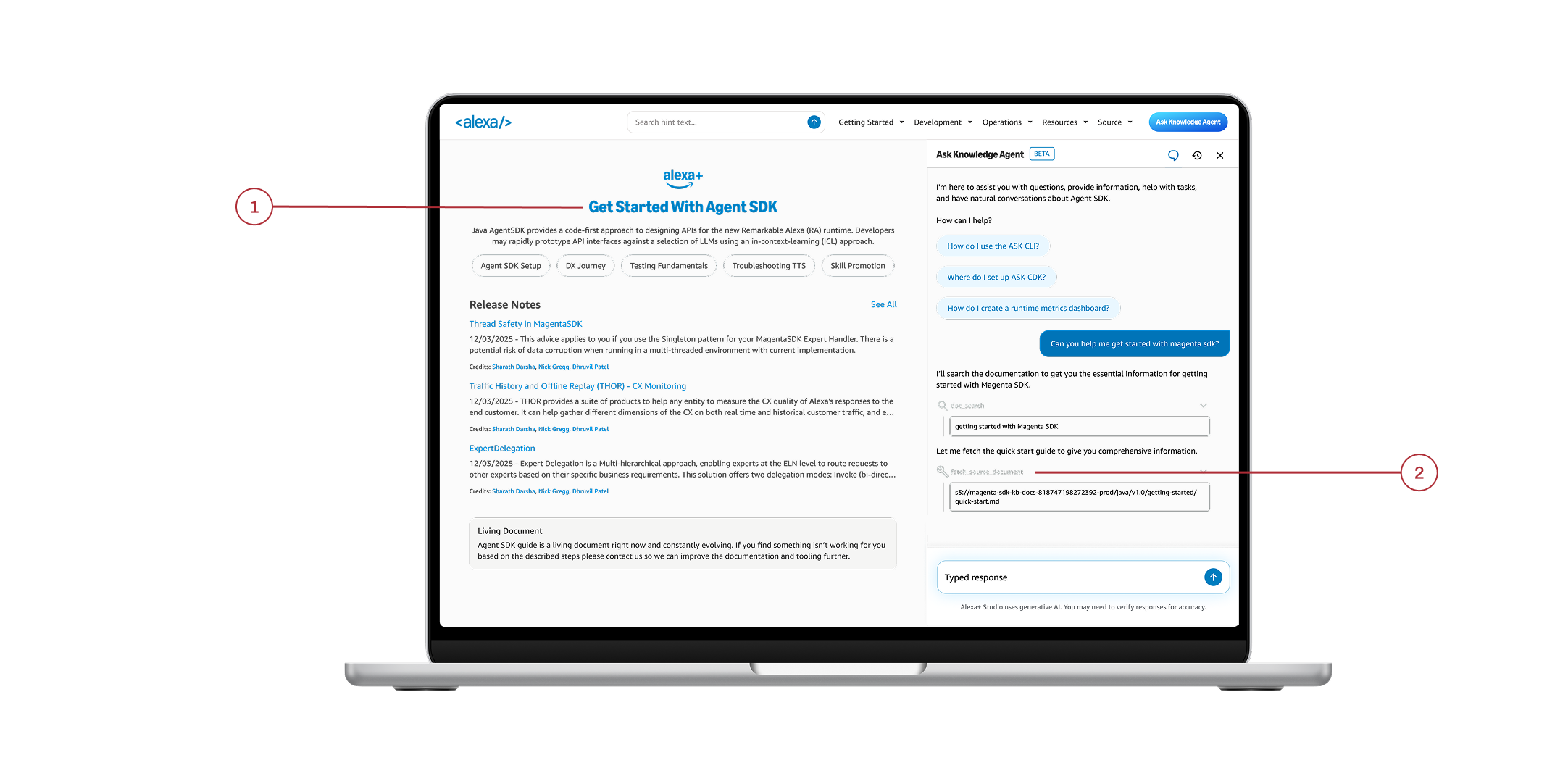
Once Studio understood the intended experience and integration path, it could help teams move through the work itself. That meant connecting discovery, requirements, implementation planning, issue investigation, validation, documentation, and delivery readiness into a coherent workflow.
Reusable patterns helped the system determine what information was required at each stage, which specialist capabilities should contribute, and what evidence was needed before progressing.
The result was not one universal process. Different integrations still had different requirements. The shared framework made those differences understandable while giving teams a consistent way to navigate them.
Designing the system and the organization together
Studio required alignment across product, engineering, design, TPM, documentation, and platform leadership.
My role was to define the product and experience direction, establish the information and workflow architecture, and help teams see how their individual systems could contribute to one coherent experience.
I partnered closely with Engineering Directors, Principal Engineers, Product Managers, TPMs, researchers, designers, and executive leaders. The work included shaping the vision, creating models and prototypes, defining reusable experience patterns, directing design execution, and using working examples to align teams around a future that could not be communicated through requirements alone.
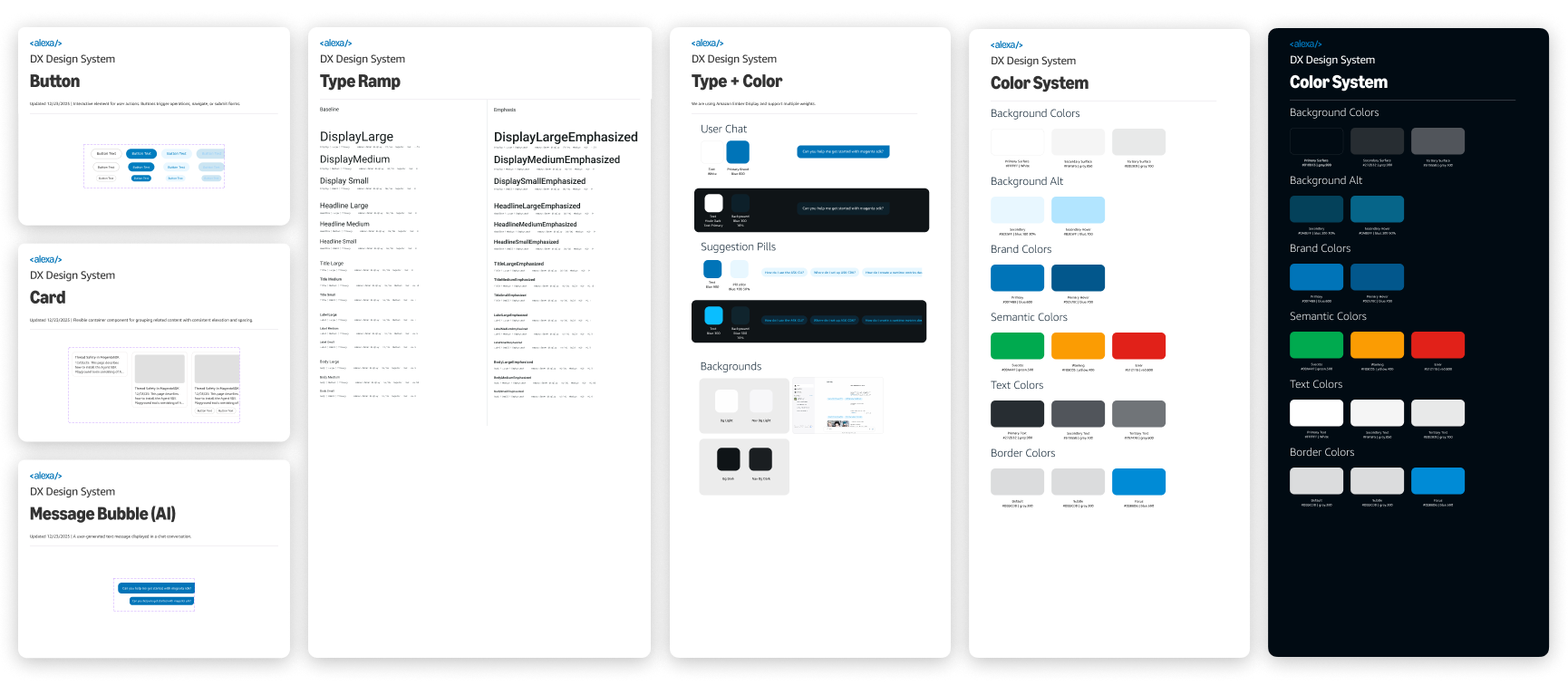
The platform architecture and the operating model evolved together. Shared experience principles gave teams a common way to make decisions even as the underlying technology and organizational boundaries continued to change.

A direction that became publicly visible
Amazon later announced Alexa+ for Builders experiences that allow brands to bring an MCP server to Alexa+, have the platform inspect it, propose an integration path, and produce a simulator-ready package for development.
That public capability closely reflects the broader experience direction behind Studio: understand what a builder already has, reduce the work required to navigate the platform, and guide the integration through an intelligent, outcome-oriented experience.
The announcement validates the customer and platform need. My portfolio focuses on the product thinking, knowledge architecture, orchestration model, and cross-functional design work that helped shape this direction.
Why it mattered
Alexa+ Studio redefined the developer environment as a place where people and AI could reason about the work together.
Instead of forcing teams to reconstruct the platform from disconnected tools and documentation, Studio brought capabilities, organizational knowledge, workflows, and specialized assistance into one shared experience.
The lasting value was not a single interface. It was the experience architecture for a platform that could understand what people were trying to build, adapt to who was asking, explain the right path, and help a cross-functional team move forward with greater clarity.